House-Hacking and Rental Property Basics in Orange County
By Charles Nguyen, DRE #01846114
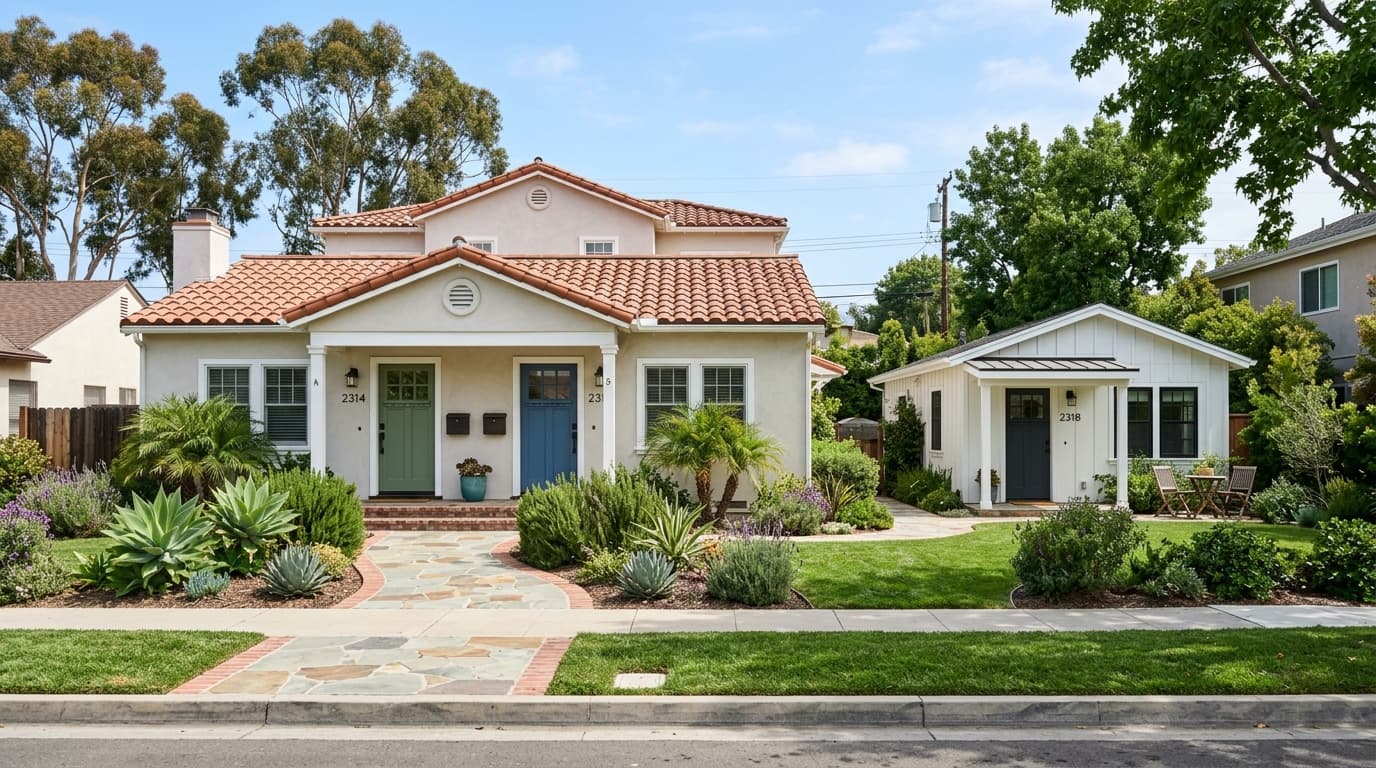
House-hacking lets you live in one unit and rent the rest. Here is how I walk first-time investors through the fundamentals in Orange County.
The most approachable way I know to start investing is to live inside the investment. House-hacking means you occupy one part of a property and rent out the rest, so your tenants help carry the cost of your housing.
What House-Hacking Actually Looks Like
In Orange County, the common versions are a duplex or triplex where you live in one unit, a single-family home with a legal ADU, or a house with a separate suite that has its own entrance and kitchen. The idea is simple. You buy one property, move in, and let rental income offset part of the monthly cost.
It is not free housing, and it is not passive. You are a landlord from day one, which means notices, repairs, and a tenant who knows where you sleep. Some people love that. Others find out in month three that they do not.
Start With the Property, Not the Dream
Before you fall for a floor plan, check the things that decide whether the plan is legal and financeable:
- Legal status of every unit. An unpermitted conversion can create problems with the city, with insurance, and with your lender's appraiser.
- Zoning and ADU rules. Rules differ by city, so verify them with the local planning department before you write an offer.
- Separate utilities or a clear plan. Who pays for water, gas, and electricity changes your real monthly cost.
- Condition of major systems. Roofs, plumbing, and electrical work on a multi-unit building cost more than most buyers expect.
I would rather talk a client out of a messy conversion than help them buy one. Fixing a permit problem after closing is slow and expensive.
Run a Simple Monthly Test
You do not need a complicated model on day one. Write down five lines and be honest with each one:
- Your total monthly housing cost, including principal, interest, property tax, and insurance.
- A realistic rent for the unit or units you will lease. Check comparable listings rather than hoping.
- A vacancy cushion, because units sit empty between tenants.
- A maintenance reserve for repairs that always arrive at inconvenient times.
- What is left after all of that, compared with what you would pay to rent a place yourself.
For property tax, California is commonly figured at roughly 1.1% of the purchase price, but your actual bill can include local assessments, so confirm it for the specific address. For financing, owner-occupied purchases can open different loan options than pure investor loans. Programs, down payment requirements, and how lenders count projected rent all change, so ask a lender to confirm what applies to you.
Where the Unified Approach Helps
Investors often lose time because the agent, lender, and escrow officer work in separate silos. Under one roof, I act with broker-level authority, our in-house KC Mortgage Desk can pre-review your tax returns or bank statements early, and Socal Trusted Escrow coordinates the closing. That structure is how an owner-occupant deal with a rental component can close in the 14 to 21 day range we aim for, instead of the 30 to 45 days common with outside escrow companies. Timelines depend on the file, so treat that as a target and not a promise.
As an example archetype, a custom residence with an ADU suite can be financed with the rental potential in mind, and a well-run escrow can wrap in about 18 days. Your situation will differ, which is why the numbers need testing before the offer.
Mistakes I See Most Often
- Counting rent that has not been confirmed or that the lease terms will not support.
- Skipping the reserve fund, then funding a roof repair on a credit card.
- Ignoring landlord-tenant obligations until a dispute shows up.
- Buying in an area chosen for hype rather than for your commute, your budget, and the housing type that fits how you live.
Pick the property that you would be comfortable living in even if the rental plan underperformed. That single rule keeps most first-time house-hackers out of trouble.
Next Step
If you want a structured way to work through this, use the Download 2026 Playbook button on this page. It gives you a checklist for evaluating a first rental property, and you can bring your answers to a conversation with me whenever you are ready.
Educational information only; not legal, tax, or lending advice. Consult a CPA, attorney, or lender about your situation. Rates, programs, and rules change.
Charles Nguyen, Licensed Broker, DRE #01846114
- #house hacking
- #rental property
- #real estate investing
- #orange county
- #adu
- #first investment property
- #midway city
Educational content only, not individualized legal, tax, or lending advice. Discuss your property and timing with a licensed professional, or see how Charles can help.
Download 2026 Playbook